

With the growing popularity of social media platforms, many small business owners believe that having a website is no longer essential. A Facebook page, Instagram account, or WhatsApp number may seem sufficient to attract customers and promote services.
However, the reality is very different.
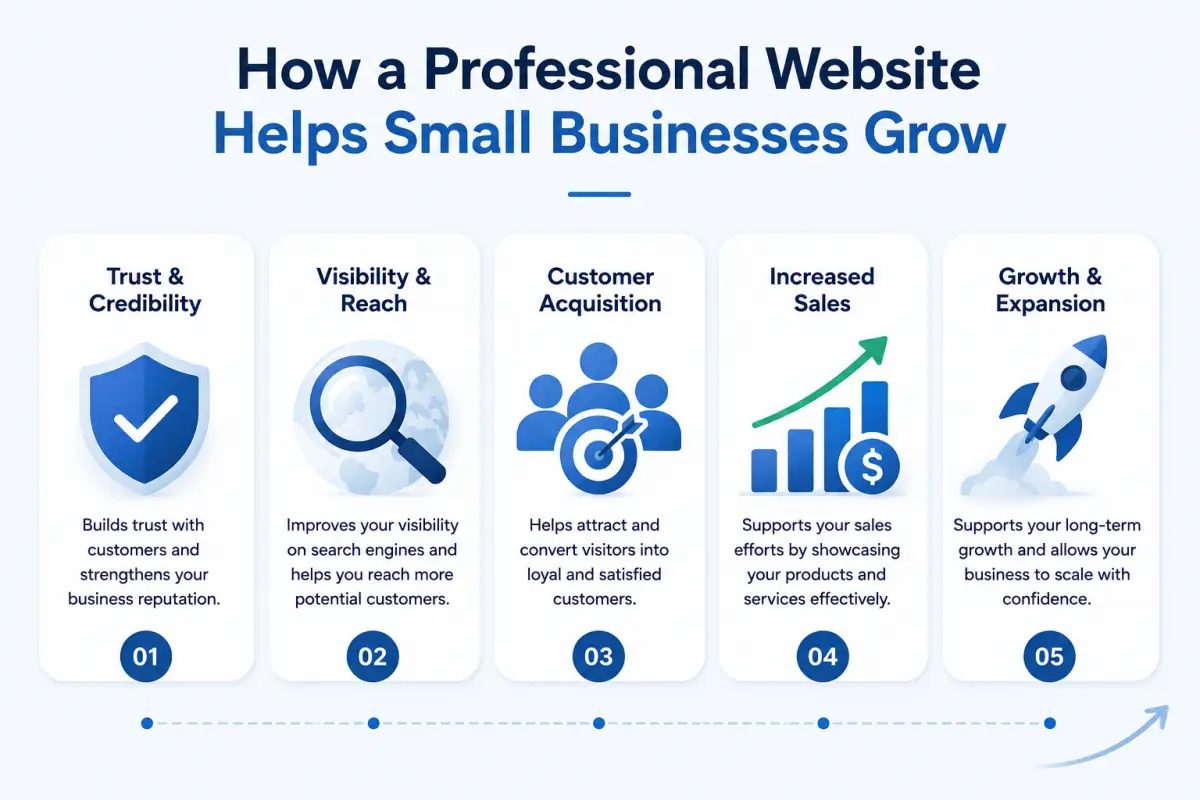
While social media plays an important role in marketing and communication, it cannot replace a professional website that serves as the official digital presence of a business. As more customers rely on online research before making purchasing decisions, having a professional website has become one of the most effective ways to build trust and support long-term growth.
Your Website Is Your Official Digital Presence
When potential customers search for your business online, they expect to find an official website that clearly explains who you are and what you offer.
A professional website gives your business an independent digital identity and creates a stronger impression than relying solely on social media profiles.
It also provides a structured space to showcase:
- Company information.
- Services and products.
- Contact details.
- Previous projects.
- News and updates.
All within an environment that you fully control.
Building Trust With Customers
Trust is one of the most important factors influencing customer decisions.
When visitors find a professional website with clear information, organized content, and a modern design, they are more likely to view the business as credible and reliable.
A website also allows businesses to highlight:
- Experience.
- Achievements.
- Certifications.
- Customer testimonials.
- Portfolio work.
These elements help strengthen confidence and encourage engagement.
Increasing Visibility in Search Engines
One of the greatest advantages of a website is the ability to appear in search engine results.
When people search for products or services related to your business, your website can attract new visitors and potential customers through organic search traffic.
Relying entirely on social media means your visibility depends heavily on platform algorithms and paid advertising.
A website provides a long-term digital asset that can continue generating opportunities for years.
Presenting Services and Products Professionally
Every business has a story, unique strengths, and services that deserve to be presented clearly.
A website makes it easier to organize information and guide visitors toward understanding your offerings.
Businesses can showcase:
- Services.
- Products.
- Pricing information.
- Previous projects.
- Case studies.
- Success stories.
This helps potential customers make informed decisions more quickly.
Owning a Digital Asset You Control
When a business relies only on social media platforms, it remains dependent on third-party rules and algorithms.
Platform policies may change, reach may decline, or accounts may face unexpected restrictions.
A website, on the other hand, is a digital asset that belongs to your business. You control the content, branding, user experience, and communication channels.
This level of ownership creates greater stability and long-term security.
Supporting Sales and Customer Acquisition
A professional website can do far more than display information.
It can actively support business growth through:
- Contact forms.
- Service requests.
- Online booking systems.
- E-commerce functionality.
- Email subscriptions.
- Landing pages.
These tools help generate leads, improve customer communication, and increase sales opportunities.
Why Social Media Alone Is Not Enough
Social media platforms are valuable marketing tools, but they should not be viewed as complete replacements for a website.
Social channels help businesses engage with audiences, while websites provide a professional and stable environment for presenting information and converting visitors into customers.
The strongest digital strategies combine both channels rather than relying on only one.
How to Start With the Right Website
Small businesses do not necessarily need complex or expensive websites.
In many cases, a simple professional website can include:
- A homepage.
- Services page.
- About page.
- Contact information.
- Inquiry form.
As the business grows, additional features and content can be added over time.
The most important factors are clarity, speed, usability, and alignment with the company’s brand identity.
Conclusion
A professional website is no longer a luxury for small businesses.
It is one of the most valuable digital assets a company can own, helping build credibility, attract customers, support sales, and create sustainable online growth.
As digital transformation continues to reshape industries, businesses with a strong online presence are better positioned to compete and seize new opportunities.