

In today’s crowded digital landscape, having a great product or service is no longer enough. Businesses compete not only on quality but also on how effectively they communicate their value and present themselves to their audience.
This is where media identity becomes essential.
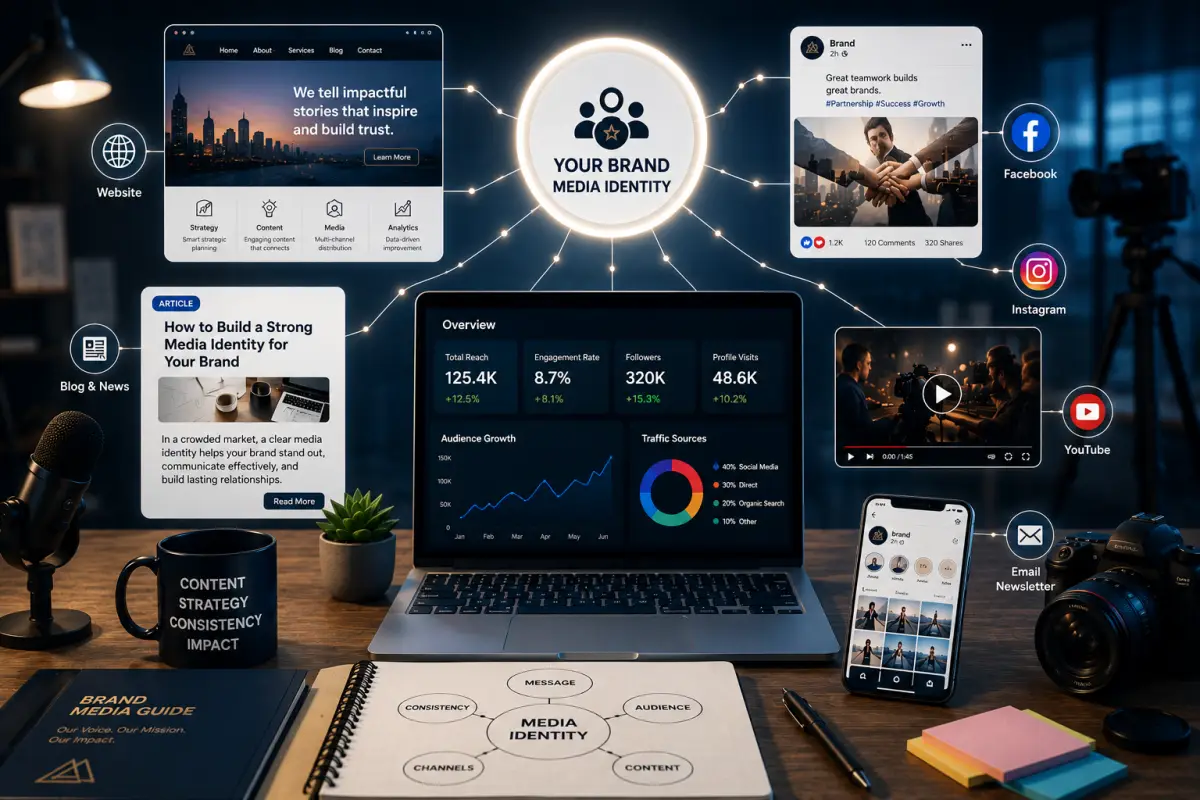
A media identity defines how a brand communicates, what messages it delivers, who it speaks to, and how it presents itself across different platforms and channels. When this identity is clear and consistent, brands are better positioned to build trust, strengthen their presence, and create lasting impact.
Why Does Your Brand Need a Clear Media Identity?
A strong media identity creates a unified image across every customer touchpoint.
Whether someone interacts with your website, social media content, marketing campaigns, or public communications, they should experience a consistent personality and message.
A well-defined media identity helps:
- Build trust and credibility.
- Create a clear brand image.
- Differentiate the brand from competitors.
- Improve audience engagement.
- Support marketing and communication efforts.
Define Your Core Brand Message
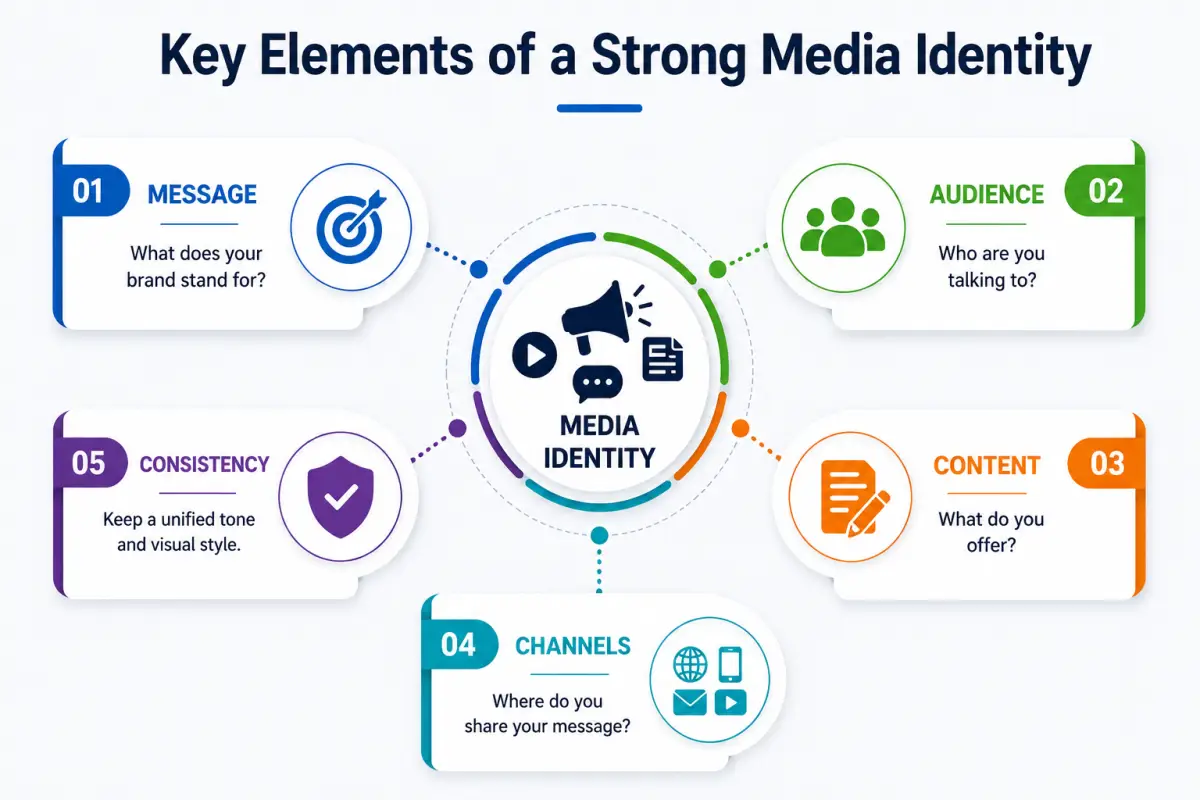
Every professional media identity starts with a clear message.
Your brand should be able to answer key questions such as:
- What does the brand stand for?
- What value does it provide?
- What problems does it solve?
- Why should customers choose it?
The clearer the message, the easier it becomes to create consistent communication and content.
Understand Your Target Audience
A successful media identity must be built around the audience it serves.
The way you communicate with business executives differs from how you communicate with consumers, young audiences, or specific industries.
Understanding your audience requires analyzing:
- Demographics.
- Interests.
- Needs.
- Challenges.
- Preferred communication channels.
This insight helps create more relevant and effective content.
Maintain a Consistent Communication Style
Every brand has its own communication personality.
Some brands prefer a formal tone, while others adopt a more conversational and approachable style.
Regardless of the chosen tone, consistency is critical across:
- Brand voice.
- Writing style.
- Headlines.
- Key messages.
- Customer interactions.
Consistency strengthens recognition and reinforces brand identity.
Build a Consistent Content Strategy
Content is one of the most powerful components of a media identity.
Even the strongest visual branding cannot achieve lasting results without valuable and consistent content.
An effective content strategy should include:
- Clear objectives.
- Relevant topics.
- Multiple content formats.
- A publishing schedule.
- Messaging aligned with brand values.
Consistent content helps build stronger relationships with audiences over time.
Choose the Right Communication Channels
Brands do not need to be present on every platform.
Instead, they should focus on the channels where their target audience is most active.
Common channels include:
- Websites.
- LinkedIn.
- Facebook.
- Instagram.
- YouTube.
- Email newsletters.
- News platforms.
All channels should operate under a unified media identity.
Measure Performance and Evolve
A media identity should evolve alongside audience expectations and business goals.
Regular performance analysis helps brands identify opportunities for improvement.
Important metrics include:
- Engagement rates.
- Reach.
- Audience growth.
- Content performance.
- Campaign effectiveness.
Data-driven insights support continuous improvement and long-term success.
Common Media Identity Mistakes
Many brands weaken their identity through avoidable mistakes such as:
- Lacking a clear message.
- Inconsistent communication across platforms.
- Directly copying competitors.
- Publishing content without strategy.
- Frequently changing tone and messaging.
These issues can confuse audiences and reduce trust.
Conclusion
A media identity is far more than a logo or visual design. It is the complete communication framework that shapes how a brand is perceived by its audience.
When messaging is clear, content is consistent, and communication channels are managed strategically, brands can build stronger relationships, increase credibility, and create long-term impact in an increasingly competitive media environment.