

For many years, digital transformation was often viewed as an optional initiative that businesses could postpone until they had more time, resources, or budget.
Today, that perspective has changed dramatically.
Technology has transformed the way companies operate, communicate with customers, and make decisions. Digital tools and systems have become essential components of modern business operations, regardless of industry or company size.
The question is no longer:
“Do we need digital transformation?”
Instead, it has become:
“How can we implement digital transformation effectively?”
How Customer Expectations Have Changed
Modern customers rely heavily on digital channels when researching products, comparing options, communicating with businesses, and making purchasing decisions.
Customers now expect:
- A professional website.
- Fast and convenient communication.
- Online services and support.
- Accurate and updated information.
- A seamless experience across devices.
Businesses that fail to meet these expectations risk losing customers to more digitally prepared competitors.
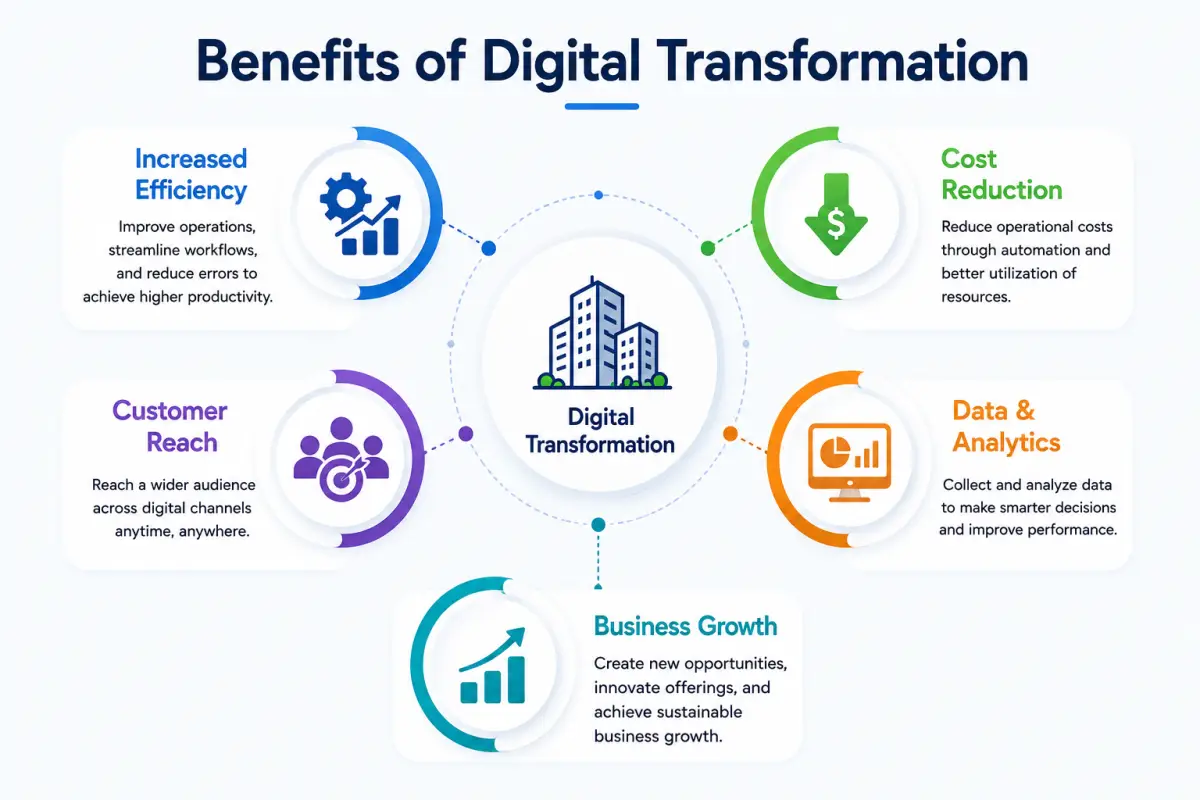
Increasing Efficiency and Reducing Costs
One of the primary goals of digital transformation is improving operational efficiency.
Digital systems help organizations:
- Reduce manual work.
- Complete tasks faster.
- Minimize errors.
- Improve team collaboration.
- Save time and resources.
Over time, these improvements contribute to lower operating costs and higher productivity.
Reaching Customers More Effectively
In the past, businesses relied heavily on physical presence and traditional marketing methods to reach customers.
Today, digital channels provide far greater opportunities through:
- Websites.
- Search engines.
- Social media platforms.
- Email marketing.
- Digital advertising campaigns.
These tools allow companies to expand their reach and grow beyond geographical limitations.
Making Data-Driven Decisions
One of the greatest advantages of digital transformation is the ability to collect and analyze data continuously.
Instead of relying on assumptions, businesses can use data to understand:
- Customer behavior.
- Product and service performance.
- Marketing campaign results.
- Strengths and weaknesses.
- Growth opportunities.
Data-driven insights lead to better decisions and more effective business strategies.
Strengthening Competitive Advantage
Markets have become increasingly competitive.
Organizations that embrace digital solutions are often able to:
- Respond faster to change.
- Improve customer experiences.
- Continuously enhance their services.
- Identify new growth opportunities.
Meanwhile, businesses that delay digital transformation often struggle to keep pace with evolving market demands.
Examples of Digital Transformation
Digital transformation goes far beyond launching a website or creating social media accounts.
It can include:
- Digitizing internal processes.
- Customer relationship management systems (CRM).
- E-commerce solutions.
- Automation tools.
- Digital analytics.
- Cloud computing.
- Collaboration and project management platforms.
Each organization can adopt the technologies that best support its goals and operational needs.
How to Start Your Digital Transformation Journey
Successful digital transformation begins with strategy, not technology alone.
Key steps include:
Assess Your Current Situation
Identify existing challenges, strengths, and improvement opportunities.
Set Clear Priorities
Focus on initiatives that will create the greatest impact.
Build a Strong Digital Presence
Develop a professional website and effective communication channels.
Use Data Effectively
Implement measurement and analytics tools to support decision-making.
Commit to Continuous Improvement
Digital transformation is an ongoing process, not a one-time project.
Conclusion
Digital transformation is no longer a luxury or a future consideration.
In a business environment increasingly driven by technology, data, and digital communication, organizations that embrace transformation are better positioned to improve efficiency, reach customers, drive growth, and remain competitive.
Most importantly, digital transformation is not reserved for large enterprises. It has become a necessity for businesses of all sizes that want to succeed in an evolving digital world.