
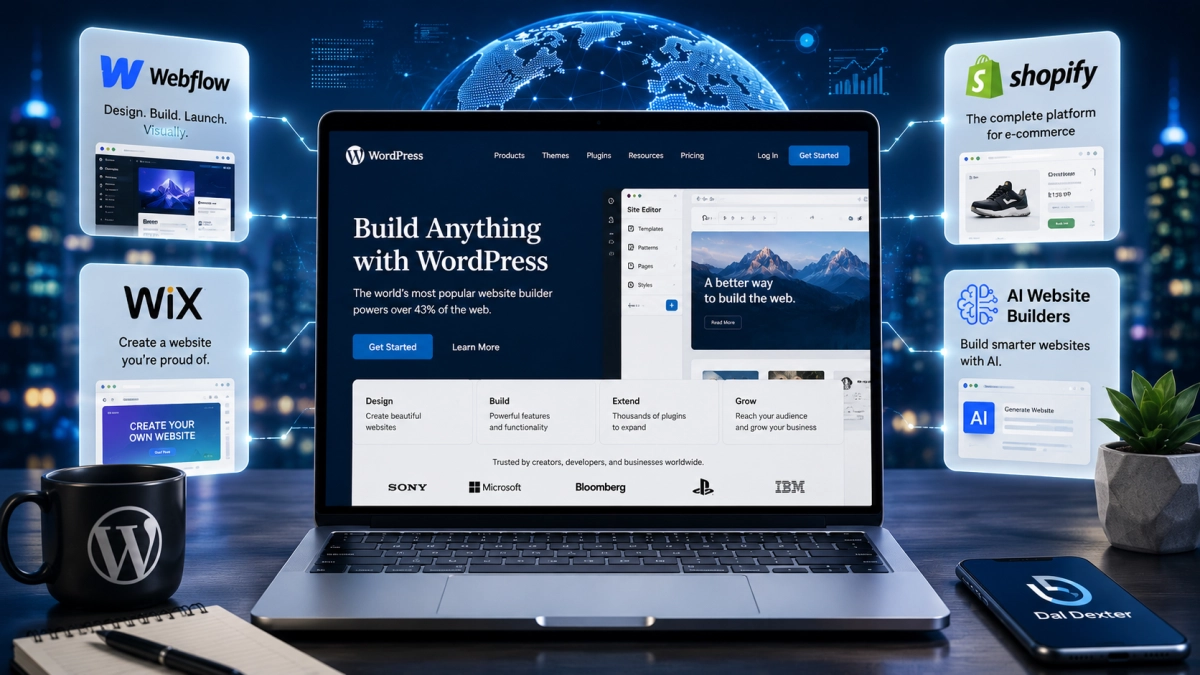
The Platform That Built a Large Part of the Web
When people think about website creation, WordPress is often the first platform that comes to mind. What started as a simple blogging tool has evolved into a comprehensive content management system powering millions of websites worldwide, from personal blogs and business websites to major news portals and online stores.
For more than two decades, WordPress has maintained a dominant position in the CMS market. However, the web development landscape in 2026 looks very different from what it did just a few years ago.
Today, WordPress faces increasing competition from platforms such as Webflow, Shopify, and Wix, while artificial intelligence and no-code website builders continue to reshape how websites are created and managed.
This raises an important question: Is WordPress still the best platform for building websites in 2026?
How Did WordPress Become So Dominant?
To understand WordPress’s position today, it is important to understand why it became so successful in the first place.
Since its launch in 2003, WordPress has benefited from its open-source philosophy, allowing developers around the world to contribute to its growth and improvement.
Over time, thousands of plugins, themes, integrations, and educational resources have been created around the platform, building one of the largest ecosystems in the web industry.
This ecosystem enabled WordPress to evolve far beyond blogging and become a flexible solution for almost any type of website.
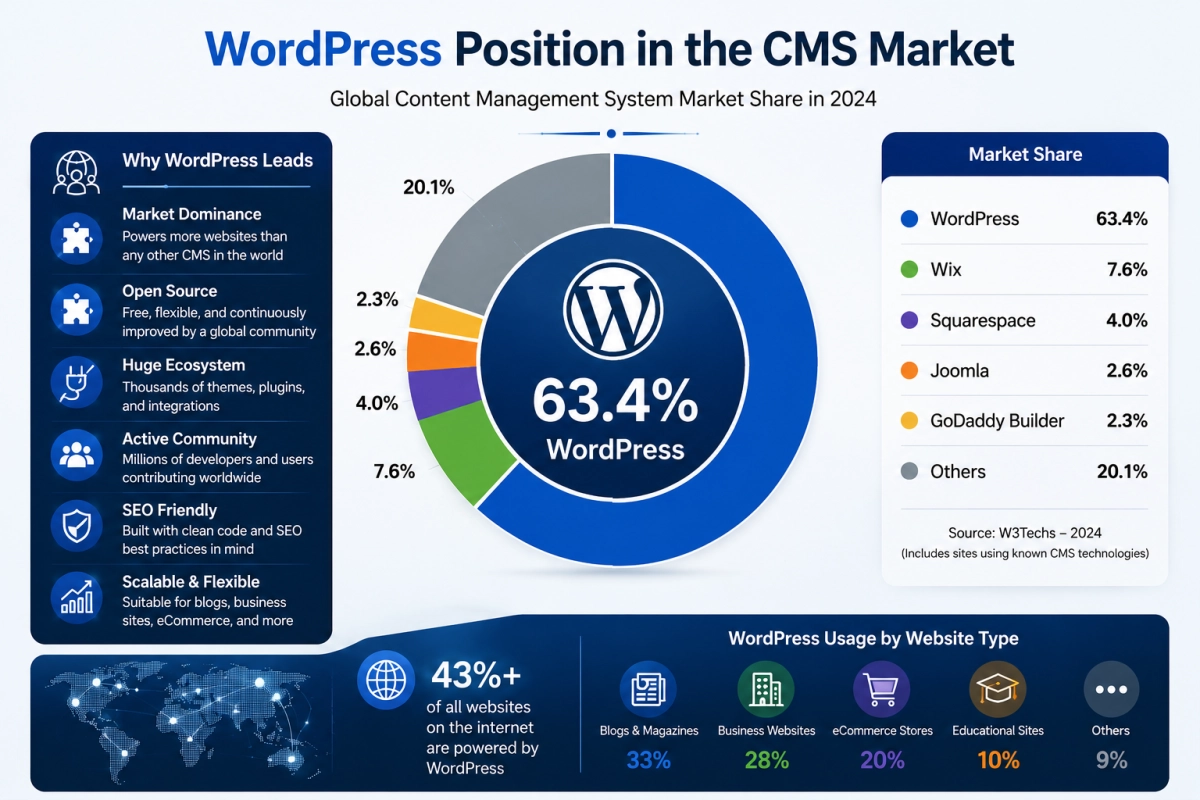
Why WordPress Remains Strong Today
Despite growing competition, WordPress continues to offer several advantages that make it attractive to businesses, developers, and organizations.
Exceptional Flexibility
One of WordPress’s greatest strengths is its ability to adapt to different project requirements.
It can be used to build:
- Business websites
- News portals
- E-commerce stores
- Membership platforms
- Educational websites
- Booking systems
This flexibility allows organizations to scale and expand without rebuilding their entire digital infrastructure.
A Massive Ecosystem
Few platforms can match the size of the WordPress ecosystem.
Developers have access to thousands of plugins, themes, integrations, and community resources that reduce development costs and accelerate project delivery.
Full Ownership and Control
Unlike many hosted website builders, WordPress gives organizations complete control over their data, hosting environment, and technical infrastructure.
For businesses with specific security, compliance, or scalability requirements, this level of control is often a major advantage.
Strong SEO Foundations
WordPress provides a solid foundation for search engine optimization.
Combined with specialized SEO tools and performance optimization strategies, it remains one of the most search-friendly content management systems available.
The Challenges Facing WordPress in 2026
While WordPress remains powerful, it is not without challenges.
Increasing Complexity
Modern WordPress websites often require multiple plugins, ongoing maintenance, security monitoring, and performance optimization.
For non-technical users, this can sometimes feel overwhelming compared to simpler website builders.
Performance Management
WordPress itself is not inherently slow, but poorly optimized themes, excessive plugins, and weak hosting environments can negatively impact performance.
Achieving excellent speed often requires proper planning and technical expertise.
Security Considerations
Because WordPress powers such a large portion of the web, it remains a common target for cyberattacks.
Maintaining security requires regular updates, trusted extensions, backups, and proactive monitoring.
Growing Competition
The rise of modern website-building platforms has created more choices than ever before, especially for users seeking simplicity and speed.
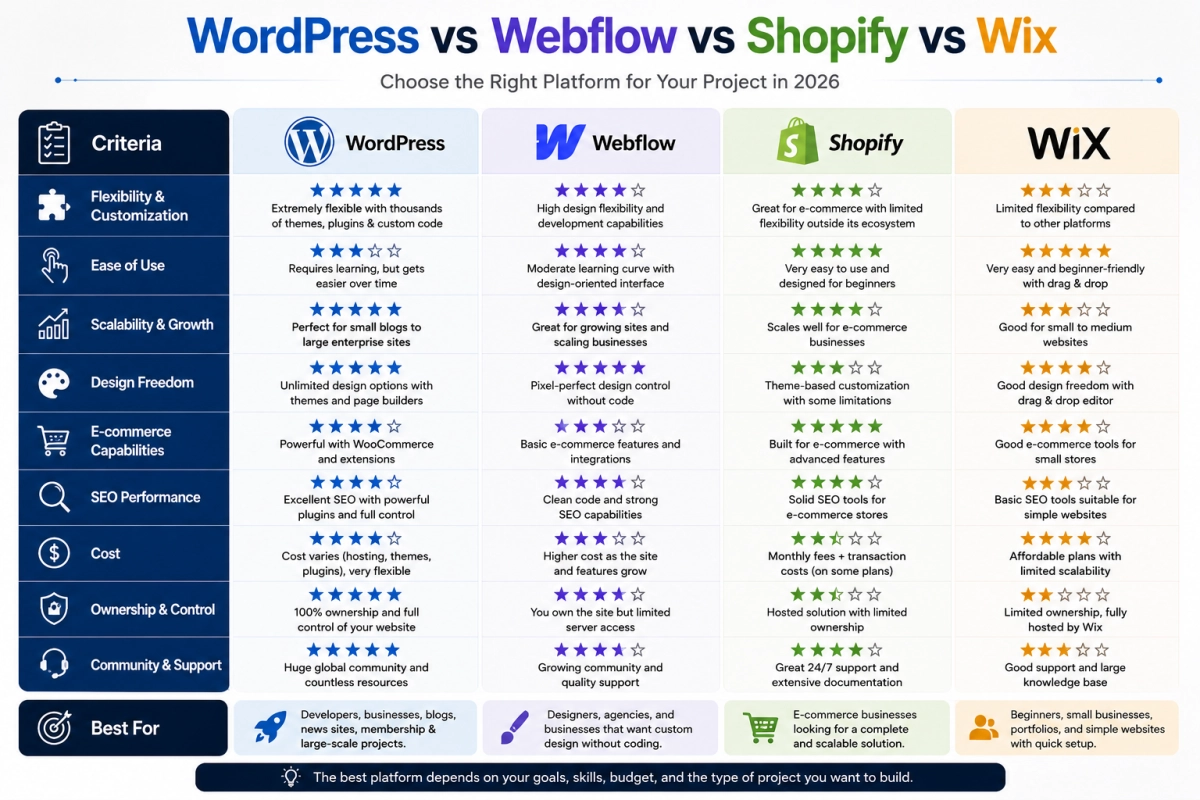
WordPress vs Modern Platforms
WordPress vs Wix
Wix focuses on ease of use and visual website building.
While it is excellent for beginners and small projects, WordPress offers significantly greater flexibility and scalability.
WordPress vs Shopify
For businesses focused entirely on e-commerce, Shopify provides a streamlined experience.
However, WordPress combined with WooCommerce delivers greater customization and long-term flexibility.
WordPress vs Webflow
Webflow has gained popularity among designers due to its visual design capabilities.
Yet WordPress continues to lead in ecosystem size, content management flexibility, and long-term expansion opportunities.
The Impact of Artificial Intelligence
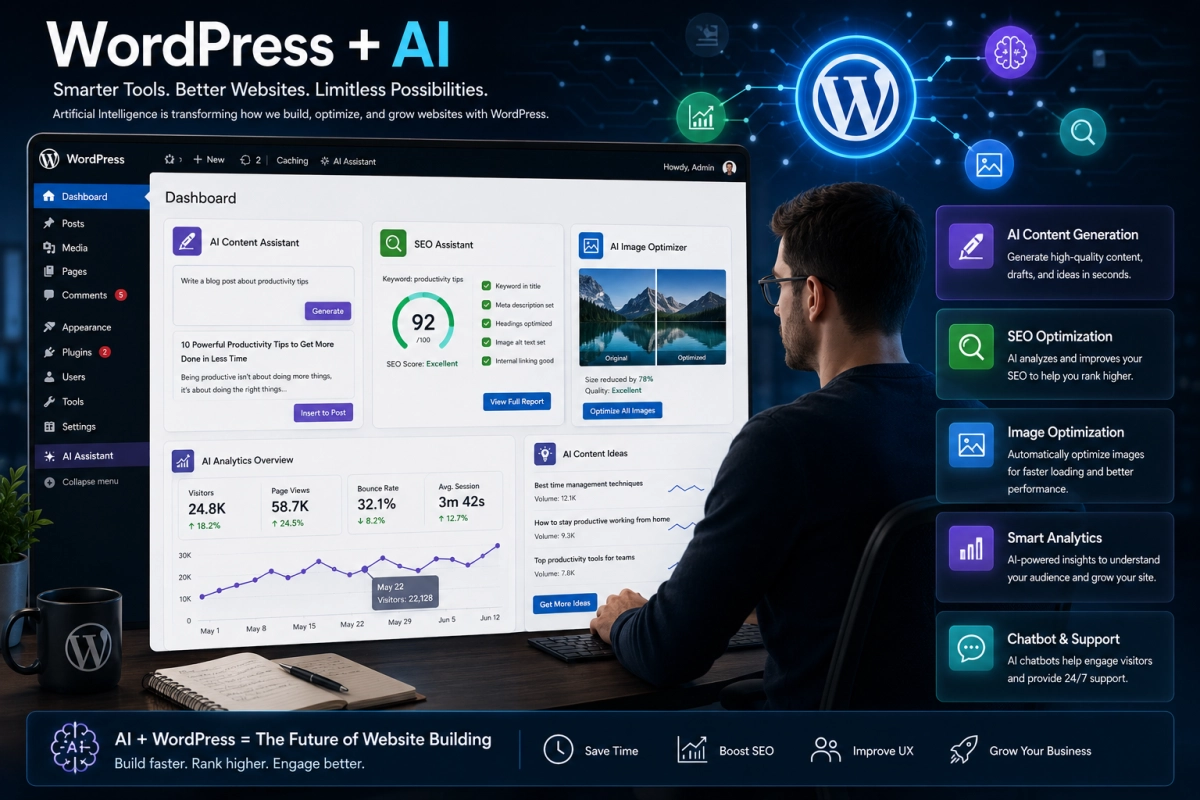
Artificial intelligence is transforming website creation, but it is not replacing WordPress.
Instead, AI is increasingly becoming part of the WordPress ecosystem through:
- Content generation tools
- SEO assistants
- Image optimization systems
- Website builders
- Analytics solutions
- Customer support integrations
Rather than weakening WordPress, AI may strengthen its position by making advanced capabilities more accessible.
Why Competitors Have Not Replaced WordPress
Many newer platforms offer simplicity and convenience, but WordPress continues to serve a broader range of use cases.
Large organizations often prioritize:
- Scalability
- Data ownership
- Customization
- Hosting freedom
- Long-term flexibility
These remain areas where WordPress maintains significant advantages.
When Is WordPress the Best Choice?
WordPress remains an excellent option for:
- News websites
- Corporate websites
- E-commerce projects
- Membership platforms
- Long-term digital projects
Organizations that require flexibility and growth potential often benefit most from WordPress.
When Might Another Platform Be Better?
Alternative platforms may be better suited for:
- Very small websites
- Temporary landing pages
- Users seeking zero technical involvement
- Projects requiring rapid deployment with minimal customization
Final Verdict
More than twenty years after its launch, WordPress remains one of the most powerful content management systems in the world.
While competition has become stronger and new technologies continue to emerge, WordPress still offers a unique combination of flexibility, scalability, ownership, and ecosystem strength.
The real question in 2026 is not whether WordPress is outdated.
The question is whether WordPress is the right platform for your specific project.
For many businesses and organizations, the answer remains yes.